




Introduction
When each of us renovates our house or apartment, choosing interior doors is often seen as a secondary consideration, as attention is usually focused on furniture, wall finishes, and flooring. However, picking the right slab color can be key to creating harmony throughout the space.
Black and white doors are the two most popular and versatile options that can emphasize the style and uniqueness of your interior. In our article, we will examine their advantages and features to help you make the right choice and achieve the perfect interior that creates a quiet and cozy atmosphere for every family member every day.
Aesthetic appeal
White interior doors
This is no surprise to anyone, but Snow white and Polar white really do lead the way among the entire palette. Contrary to the opinion that white doors are boring and banal, modern designers find boundless potential for experimentation in them, because this trendy shade has the ability to adapt to any style. It blends seamlessly into the space without drawing attention to itself, yet it creates a neutral backdrop for other vibrant elements.
White doors make any room look wider, filling it with a sense of cleanliness and airiness. This effect is especially noticeable in small rooms, where every centimeter counts.
Black interior doors
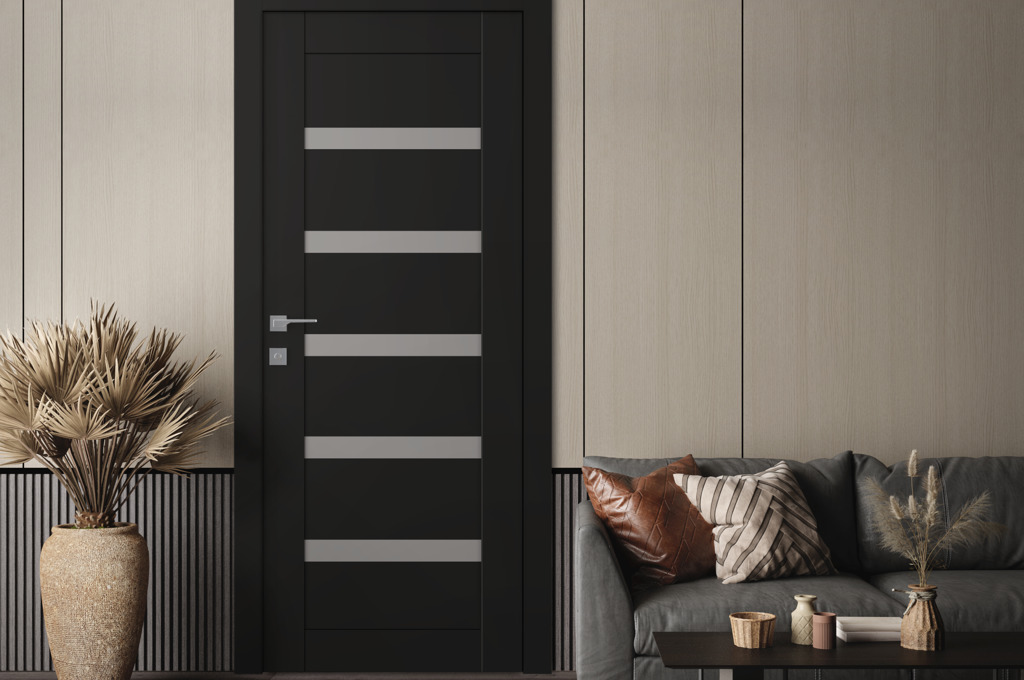
Black interior doors are quite a bold choice because they add depth and character to the interior and never go unnoticed. In some cases, they even add drama. However, despite evoking a wide range of emotions, such doors have a calming effect on the space.
Black is a symbol of solidity, style, and elegance. Black interior doors can serve as a bright accent in the interior or, conversely, add depth and austerity to the living space. They are perfect for spacious rooms and blend elegantly with metal elements, glass, wood, and other materials.
Compatibility with interior styles
The color of an interior door is not just a detail; it is an accent that can either bring an interior together or, conversely, destroy its integrity. White and black doors are two visual extremes, and each reveals itself in its own way through different styles.
White doors are a universal choice that can be easily adapted to almost any interior. They look particularly organic in:
-
Scandinavian style, characterized by its use of light, natural materials, and a sense of spaciousness, prevails here. White doors do not overload the space and visually make the room larger.
-
Classic and neoclassical styles: white doors emphasize the sophistication of the interior and harmonize with stucco, gold, and silver elements.
-
Provence: adding a touch of aged texture or soft shades to a white door creates a cozy, almost rustic atmosphere.
-
Minimalism and modern: white helps emphasize the conciseness of forms and create a feeling of lightness.
Black doors are a bolder and more striking choice. They add depth, expressiveness, and a sense of austerity to the interior. They are ideal for:
-
Lofts, where industrial aesthetics, contrasts, and textured materials are important. A black door acts as a frame for a stylish composition of concrete, brick, and metal.
-
Modern classics: black doors against light walls exude a noble and elegant appearance.
-
Art Deco: where luxury and accents are valued, a black door can become an element of drama, especially when combined with brass or gold fittings.
-
Minimalism: yes, black doors are also appropriate here. Especially if the interior is based on a play of contrasts (white walls, black furniture, and black doors create a stylish graphic composition).
When choosing a color, it is essential to consider not only style but also the lighting, room size, and the overall color palette of the interior. A white door can add airiness, while a black door can add character. It all depends on the atmosphere you want to create in your home.
Maintenance and durability
Black doors are striking, but require a little more attention. Dust, streaks from wet cleaning, and fingerprints are more noticeable on dark surfaces. Therefore, it is recommended to wipe such doors more frequently, approximately every two weeks, depending on the room's traffic. On the other hand, they look very prestigious and “expensive” in the interior.
White doors are visually more “tolerant” of minor dirt, dust, and fingerprints, which are not as noticeable on them. However, this does not mean that they do not need to be cleaned. The only caveat is that white doors may darken slightly over time if aggressive cleaning agents are used. But with proper care, they will remain bright and neat for years.
We offer a 2-year warranty on our entire range, as we are confident in the quality of our products.
All door slabs are coated with modern finishing materials (in most cases polypropylene or enamel), which are resistant to scratches, moisture, and temperature changes, and do not fade or lose color over time.
So whether you choose deep black or versatile white, maintenance will be easy and the door will retain its appearance for many years to come.
Lighting
The color of the door can visually change the perception of the room — both for the better and in unexpected ways. In bright rooms with good natural lighting, black doors look particularly striking: they do not “eat up” space, but rather emphasize architectural lines and add depth to the interior. In dark rooms, dark doors can visually weigh down the atmosphere, making the area feel more closed off.
White doors, on the other hand, are great for making a space look bigger. They reflect light (both natural and artificial) making the room brighter, airier, and visually more spacious. This is especially true for small rooms, narrow hallways, or apartments with limited natural light.
The choice between black and white is not only about style, but also about how you want to feel in the space. Not enough light? A white door will help to add it. Lots of sun and want some contrast? Black will look impressive and modern.
Costs
Color itself does not affect the price—black and white interior doors cost about the same. The difference in cost is usually not related to the shade, but rather to other parameters, including the materials used, the type of finish, the configuration, the model, and even the dimensions. Therefore, the final price is determined by a combination of characteristics, not just color. Choose what suits you in terms of style, quality, and budget. You will find the right shade in any price segment.
FAQ
Can I mix black and white doors in the same home?
Yes, mixing black and white doors can create a dynamic, designer look, especially in open-plan layouts. The key is consistency in style and balance across the space.
What hardware finishes complement black vs. white doors?
Black doors pair beautifully with brass, gold, or matte black hardware for a bold, modern aesthetic. They also work well with chrome or brushed nickel for a more understated, contemporary look. White doors, on the other hand, are incredibly versatile, so you can go classic with silver or chrome, warm things up with bronze or gold, or create contrast with black handles.